


• Skip to main content
Make a donation
Make a donation
Ruban rose Ruban rose

Don

See your cart
  • fr Visit page in: Français.
  • Inform me
    • Prevention and awareness
      • What is Breast Cancer?
      • Breast cancer risk factors
      • Male Breast Cancer
      • Breast Cancer in 2SLGBTQIA+ People
      • Breast Cancer in Black Communities
      • Breast cancer prevention
      • Signs and symptoms of breast cancer
    • Screening and diagnosis
      • Breast cancer screening
      • Breast cancer examinations and diagnosis
      • Mammography
    • After the diagnosis
      • Breast cancer types
      • Treatment for breast cancer
      • Consequences and side effects of the disease
      • Metastatic breast cancer
    • After the treatments
      • Life after treatments
      • Pregnancy after treatments
  • Support me
    • Healthy lifestyle habits
      • My Active Health Nutrition
      • My Active HealthMC Physical Activity
      • Well-being
    • Support services
      • Service Eligibility Form
      • Financial support
      • Peer support
      • Psychosocial support
      • Medical support
      • Metastatic Breast Cancer Program
      • Genetic Counseling
    • Other services
      • Educational event
      • Educational materials
      • Resources Directory
  • Get involved
    • Involvement
      • Individualized breast cancer screening program
      • Become partner
      • Organize a fundraising
      • Make a donation
      • Become a volunteer
      • Organize a conference or an information booth
      • Buy pink
    • Actors in cancerology
      • Financed projects
      • Awards and recognition
      • Calls for projects
    • Partnership
      • Our Buy Pink partners
      • Our other partners
    • Our Events
      • Flamingo Twilight 2026
  • About
    • The Foundation
      • Mission, values and vision
      • Board of directors
      • Our team
      • Our Spokeswomen
    • Join us
      • Career Opportunities
      • Why choose us?
      • Contact us
    • Impact
      • Key statistics
      • Testimonials
  • Blog
  • Shop
  • Inform me
    • Prevention and awareness
      • What is Breast Cancer?
      • Breast cancer risk factors
      • Male Breast Cancer
      • Breast Cancer in 2SLGBTQIA+ People
      • Breast Cancer in Black Communities
      • Breast cancer prevention
      • Signs and symptoms of breast cancer
    • Screening and diagnosis
      • Breast cancer screening
      • Breast cancer examinations and diagnosis
      • Mammography
    • After the diagnosis
      • Breast cancer types
      • Treatment for breast cancer
      • Consequences and side effects of the disease
      • Metastatic breast cancer
    • After the treatments
      • Life after treatments
      • Pregnancy after treatments
  • Support me
    • Healthy lifestyle habits
      • My Active Health Nutrition
      • My Active HealthMC Physical Activity
      • Well-being
    • Support services
      • Service Eligibility Form
      • Financial support
      • Peer support
      • Psychosocial support
      • Medical support
      • Metastatic Breast Cancer Program
      • Genetic Counseling
    • Other services
      • Educational event
      • Educational materials
      • Resources Directory
  • Get involved
    • Involvement
      • Individualized breast cancer screening program
      • Become partner
      • Organize a fundraising
      • Make a donation
      • Become a volunteer
      • Organize a conference or an information booth
      • Buy pink
    • Actors in cancerology
      • Financed projects
      • Awards and recognition
      • Calls for projects
    • Partnership
      • Our Buy Pink partners
      • Our other partners
    • Our Events
      • Flamingo Twilight 2026
  • About
    • The Foundation
      • Mission, values and vision
      • Board of directors
      • Our team
      • Our Spokeswomen
    • Join us
      • Career Opportunities
      • Why choose us?
      • Contact us
    • Impact
      • Key statistics
      • Testimonials
  • Blog
  • Shop
  • fr Visit page in: Français.
  • Contact us
Make a donation
Facebook Instagram LinkedIn YouTube

Rapid Search

  1. Home
  2. Inform me
  3. After the diagnosis
  4. Treatment for breast cancer
  5. Chemotherapy

Chemotherapy

After the diagnosis
  • Treatment for breast cancer
    • Treatment plan
    • Clinical trials for breast cancer
    • Surgery
    • Radiotherapy
    • Chemotherapy

    • Targeted therapies
    • Hormone therapy
  • Metastatic breast cancer
  • Consequences and side effects of the disease
    • Emotional impacts
    • Side effects of treatments
    • Financial Impacts
  • Breast cancer types

Chemotherapy and Breast Cancer

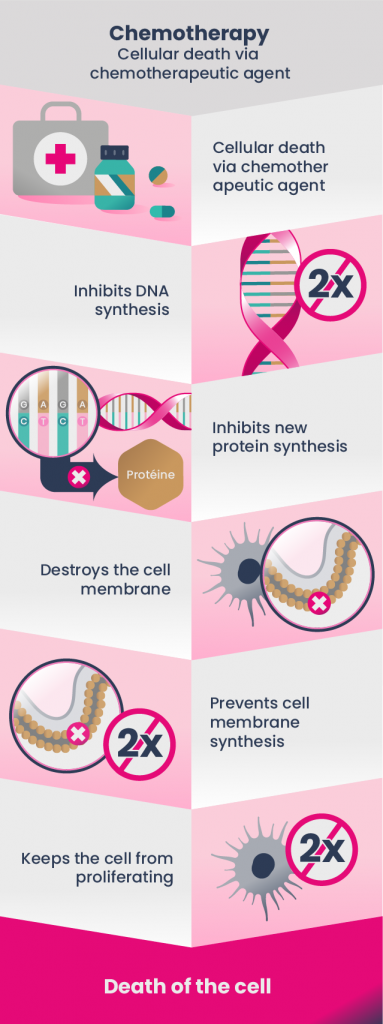
Infographic on the process of chemotherapy with breast cancer.

Chemotherapy is the administration of cytotoxic drugs to destroy cancer cells. There are more than 50 types available, used alone or in combination, either intravenously or orally. Cytotoxic drugs are usually given in cycles, interspersed with one- to three-week breaks to allow patients to recover from side effects.

Chemotherapy is given to breast cancer patients with a higher risk of recurrence and those with advanced breast cancer with a high risk of propagation. It may also be used to treat a recurrence of breast cancer or to relieve pain or control the symptoms of advanced breast cancer (palliative chemotherapy).

Chemotherapy aims to slow or prevent cancer cells from multiplying or spreading in the body. There are two strategies for this type of treatment:

  • Neoadjuvant chemotherapy is used to decrease the size of a large breast tumour before surgery.
  • Adjuvant chemotherapy aims to remove remaining cancer cells after surgery and to reduce the risk of developing new cancer.

Because chemotherapy is a systemic treatment that destroys growing cells, it also affects healthy cells and thus can cause the following side effects:

  • Lower blood cell counts
  • Infection
  • Nausea and vomiting
  • Diarrhea or constipation
  • Fatigue
  • Weight and hair loss
  • Loss of appetite
  • Pain in the mouth and sore throat
  • Early menopause
  • Fertility disorders
  • Cognitive disorders and damage to the nervous system

You may be given medications to help manage side effects (antinausea drugs, antibiotics to reduce the risk of infection, colony stimulating factors to prevent blood cell depletion).

The doctor’s decision to administer chemotherapy depends on the patient’s risk of recurrence. It is offered to those at high risk of recurrence because it significantly reduces this risk. For those at medium risk, doctors discuss the decision with patients to assess the risks and side effects of chemotherapy. Low-risk patients do not receive chemotherapy because it will not reduce their risk of recurrence. The goal is to avoid chemotherapy when it is not expected to provide benefits, as it can be difficult to tolerate. Research (notably studies on genetic analysis and biomarkers) is ongoing to determine who actually benefits from chemotherapy.

Make a donation

Stay informed by subscribing to our newsletter

"*" indicates required fields

This field is for validation purposes and should be left unchanged.
Consentement*

Ce site est protégé par reCAPTCHA et les règles de confidentialité et conditions d’utilisation de Google s’appliquent.

Need help?

Contact the support help line

Monday to Friday from 9 am to 5 pm

Facebook Instagram LinkedIn YouTube

Contact us

1115, avenue Laurier West,
Montreal (Quebec), H2V 2L3
Phone : 514 871-1717
Toll-free : 1 877 990-7171
info@rubanrose.org

Liens rapides

  • FAQ
  • Privacy policy
  • Complaint Policy
  • Donation Policy
  • Terms of Use
  • Consent Notice
  • Site Map
Ruban rose

© 2026 Quebec Breast Cancer Foundation. All rights reserved.

Charitable Registration Number: 14068 4325 RR0001

  • Agence web Vortex Solution